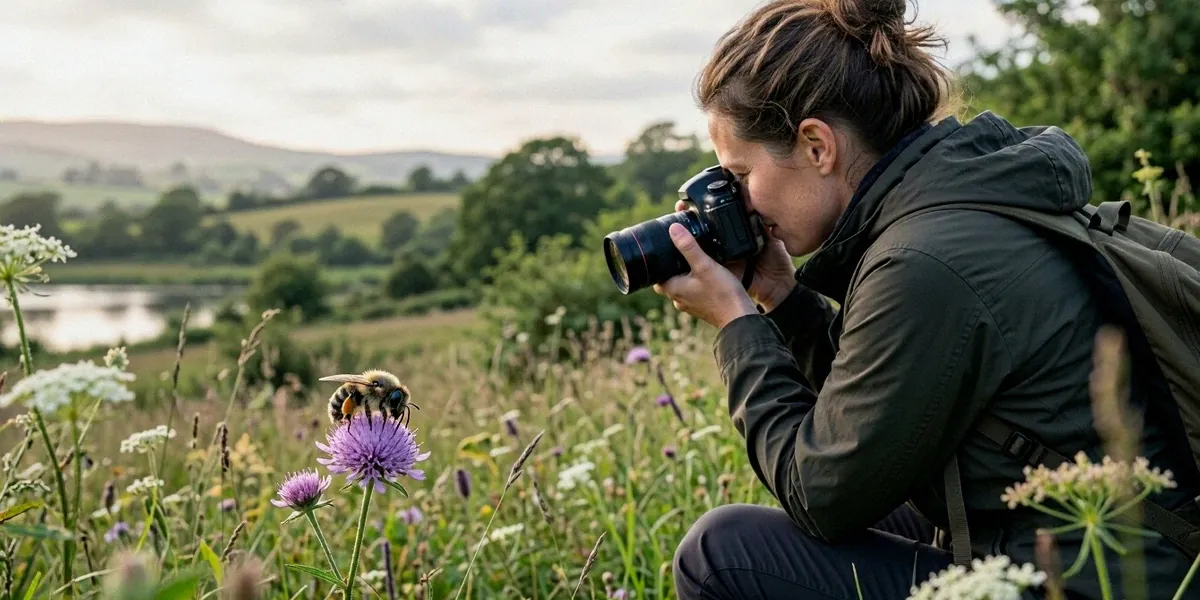
Photographing Insects Ethically in UK Gardens and Nature Reserves
We still remember the first time we watched a female stag beetle lumbering across a Surrey garden path on a warm June evening. She was enormous, glossy and utterly indifferent to us — until our flash fired. She froze, folded her legs and stayed locked in that defensive posture for a full two minutes. That single frame cost her precious time in a short adult life spent searching for a mate. Since then, our team has photographed every insect with one rule above all others: welfare first, image second. This guide shares everything we have learned about ethical insect macro photography in the UK, from fieldcraft and kit choices to reserve etiquette and honest editing.
Why Ethical Insect Photography Matters in the UK
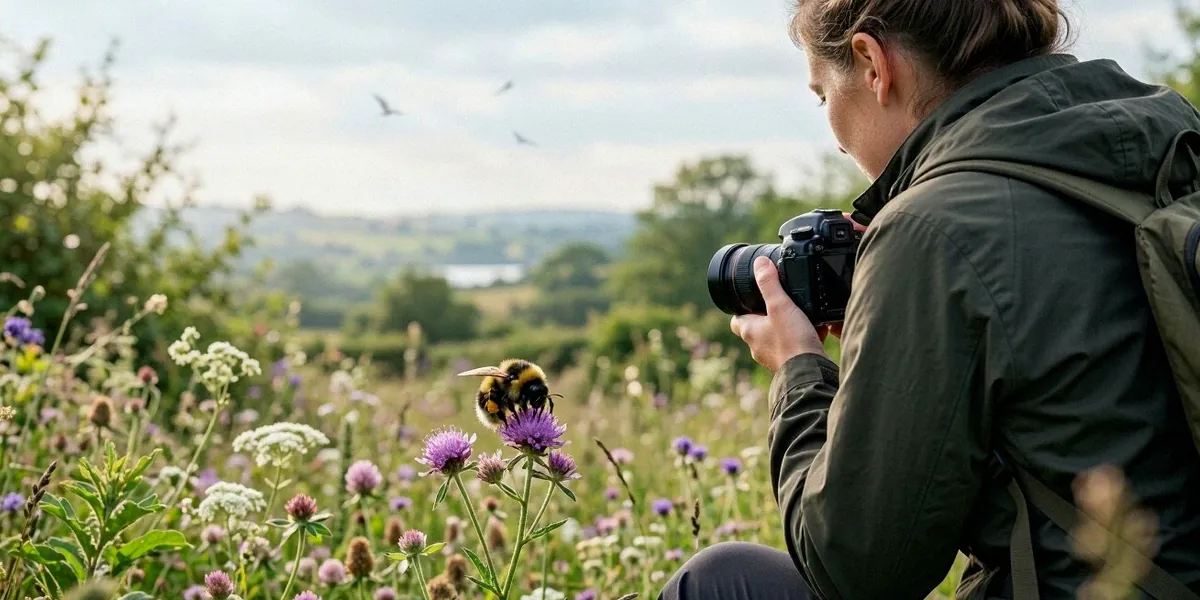
The stakes are higher than most photographers realise. The State of Nature report, produced by a partnership of leading conservation organisations, has repeatedly shown significant declines across many UK invertebrate groups, with habitat loss, pesticide use and climate change driving the losses. Buglife, the UK charity dedicated to invertebrates, estimates that we have already lost large numbers of species from our countryside and even from our towns. When populations are this fragile, every unnecessary disturbance matters — and photographers, who deliberately seek out insects, have a particular responsibility.
Ethical photography is not about never taking a photograph. It is about recognising that the subject’s survival outweighs our portfolio. A single flash burst or a moment of handling might seem trivial, but multiply it by thousands of photographers each summer and the cumulative impact becomes real.
The Impact of Flash and Handling on Invertebrates
Invertebrates are far more sensitive than their alien appearance suggests. A full-power flash at close range can temporarily dazzle nocturnal species and disrupt mating or feeding behaviour. Handling is worse: picking up a bee or butterfly can damage wing scales, remove protective oils and cause stress that reduces lifespan. We have seen photographers refrigerate insects to slow them down for stacking — a practice we firmly discourage, as cooling causes physiological stress and often death.
Legal Protection: Schedule 5 Species and Nature Reserve Rules
Some UK species are legally protected. Schedule 5 of the Wildlife and Countryside Act 1981 covers creatures such as the large blue butterfly and certain damselflies, making it an offence to intentionally disturb them. Many nature reserves add their own rules on top, restricting where tripods and flashes may be used. Always check before you shoot, and never assume that a public footpath grants unrestricted access to the habitat beside it.
Fieldcraft: Approaching Insects Without Causing Stress
Good fieldcraft is the foundation of ethical macro photography. Our routine is simple: arrive early, move slowly, and let the insects come to us. Early morning sessions in late spring and summer are ideal — many species are torpid after cool nights and warm up gradually, which means they settle without being chased. Midday heat sends bees and hoverflies into constant motion, making both welfare and sharp focus harder to achieve.
Watch where you put your feet as carefully as where you put your lens. Trampling vegetation destroys basking spots, egg-laying sites and the micro-habitats insects depend on. We stay on paths wherever possible and kneel rather than stand over low vegetation. A groundsheet or knee pads help you get low without crushing the plants around you.
Reading Insect Behaviour and Body Language
Insects tell you when you are too close. Learn the signals:
- A bee raising one front leg is warning you off — back away.
- Butterflies clamping their wings shut or dropping into grass are stressed, not posing.
- Dragonflies that repeatedly take off and resettle are being flushed; give them space and wait.
- Beetles that tuck their legs and play dead are in a defensive state — retreat and return later.
If you see any of these, stop, step back and let the insect resume natural behaviour. A patient photographer always gets the better shot.
Using a Raynox DCR-250 to Keep Your Distance
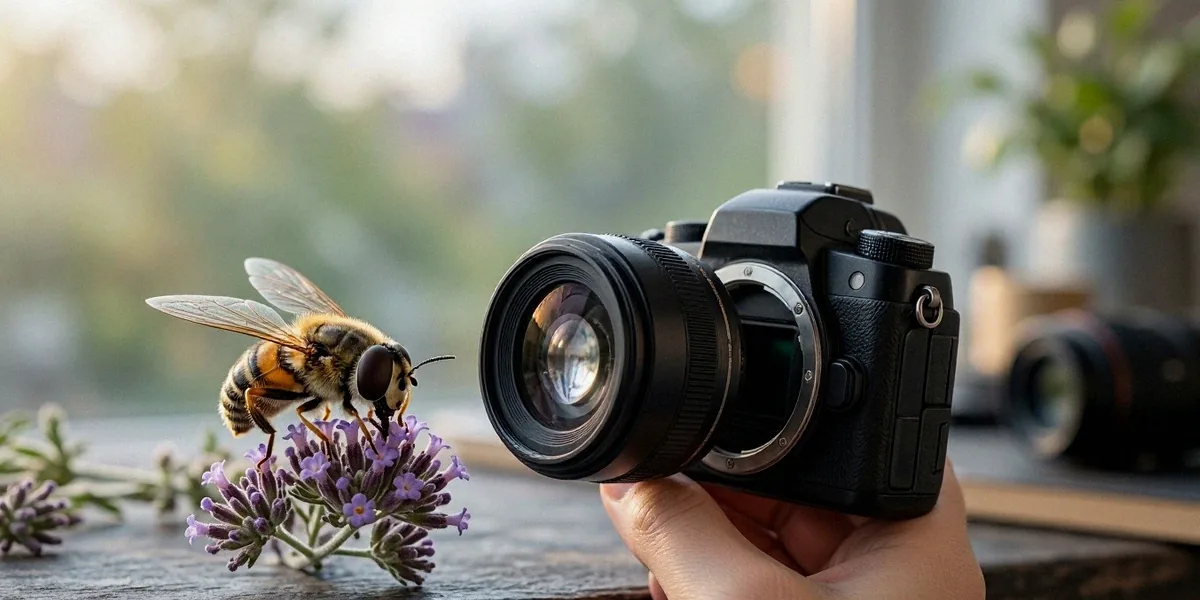
The Raynox DCR-250 is one of our favourite tools for ethical macro because it lets us fill the frame without crowding the subject. This clip-on close-up lens converts a standard telephoto zoom into a high-magnification macro setup, so a 55–250mm lens can achieve true macro framing from a working distance of 20–30cm rather than a few centimetres. That extra space is the difference between a relaxed insect and a flushed one. Pair it with a telephoto zoom and you can photograph skittish species like solitary bees and damselflies from a respectful distance, then crop in later.
Ethical Kit Choices for UK Macro Photographers
Your gear choices have a direct welfare impact. A 100mm macro lens is the classic UK choice for insects because it provides a comfortable working distance, image stabilisation and fast autofocus without the extreme closeness of a 60mm. Longer focal lengths — 150mm or 180mm — are even better for nervous species, though they cost more and are heavier to carry on long reserve walks.
Diffused Flash vs Natural Light: Welfare Considerations
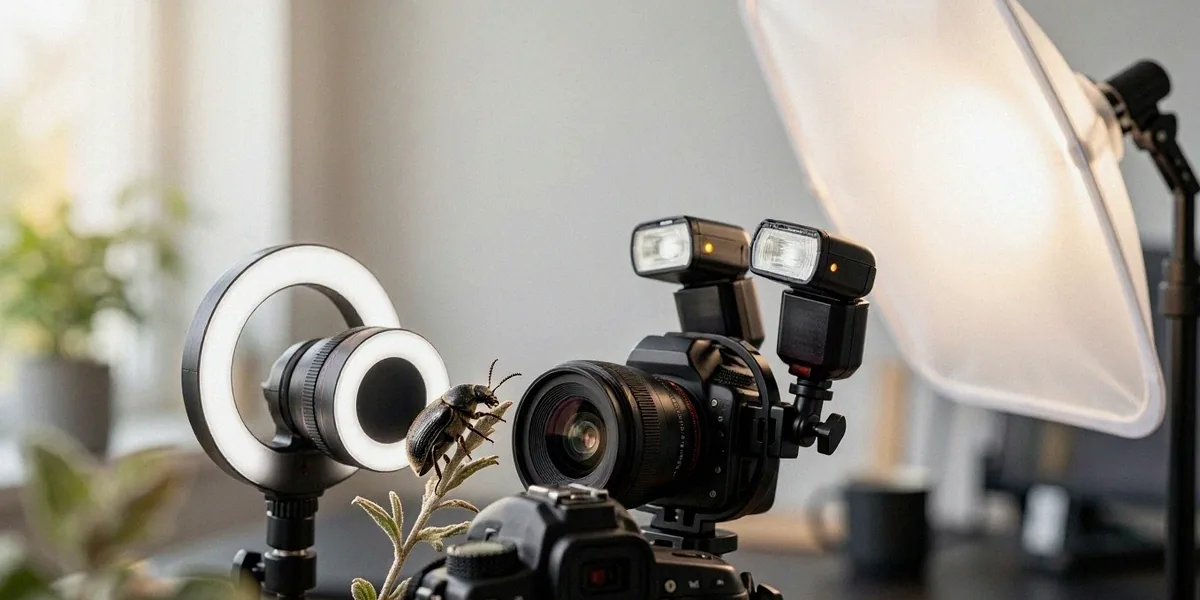
Flash is not inherently unethical, but harsh, undiffused flash is. A bare speedlight at close range can dazzle and disorient. Our approach is to use a large diffuser — a softbox or a homemade diffuser made from a plastic bowl and greaseproof paper — which spreads the light and dramatically reduces the intensity the insect experiences. Natural light is gentler still and often produces more attractive results in overcast UK conditions. Where possible, we shoot at ISO 400–800 with natural light and reserve flash for early mornings or deep shade.
When Focus Stacking Is and Isn’t Appropriate
Focus stacking is a superb technique for static subjects such as fungi, lichen or dead insects, but it is generally inappropriate for live, active invertebrates. Capturing 20–50 frames requires the subject to remain perfectly still, which usually means chilling, restraining or harassing it. Our rule is straightforward: stack the dead, the dormant or the immobile. For live insects, take a single well-composed frame and accept a slightly shallower depth of field. It is a fair trade for the subject’s wellbeing.
Ethical Practices in UK Gardens and Nature Reserves
Different locations demand different behaviour. On RSPB reserves, Wildlife Trusts sites and National Trust land, you are a guest in a protected habitat. Follow marked paths, respect closures for breeding seasons, and never move vegetation, stones or logs to improve a composition. If you want to photograph in a restricted area, contact the reserve office in advance — many are happy to grant permits to responsible photographers.
Reserve Etiquette: Permits, Paths, and Protected Species
Baiting — using sugar water, honey or dead prey to attract insects — is a common trick that we strongly discourage. It alters natural behaviour, can spread disease between individuals and concentrates insects in unnatural numbers where predators can exploit them. Never use it on a reserve. If you are photographing a Schedule 5 species, confirm you have the correct licence and keep your distance from nesting or egg-laying sites.
Gardening for Insects: Native Plants and Log Piles
The most ethical photography practice of all is to create habitat. In our own gardens we have planted native species such as foxgloves, wild marjoram, field scabious and ivy, and left a corner wild with a log pile and leaf litter. These features support solitary bees, hoverflies, beetles and overwintering butterflies — and they give you a legitimate, low-impact place to photograph. A garden pond, even a small one, transforms what you can find on your doorstep.
Editing and Sharing Your Insect Photos Responsibly
Ethics do not end when you pack up your kit. What you do with the image afterwards shapes how others perceive and treat the natural world.
Honest Post-Processing: What to Declare
Focus stacking composites, background replacements and heavy cloning should be declared in your caption or metadata. If your image is a stack of 40 frames, say so. If you removed a distracting twig, mention it. Audiences trust photographers who are transparent, and honesty protects the credibility of macro photography as a whole. Avoid edits that misrepresent an insect’s colour, size or behaviour — this can mislead recorders and conservationists who use photographs as evidence.
Sharing Locations Without Harming Habitats
Precise location data can be dangerous. Rare species — particularly Schedule 5 insects and scarce orchids — can be targeted by collectors or disturbed by crowds if GPS coordinates are published. We strip location metadata from images of sensitive species and describe locations only in general terms, such as “a Wildlife Trust reserve in the Chilterns.” Credit conservation organisations such as Buglife, the RSPB and your local Wildlife Trust when they have helped or hosted you.
FAQ
Is using flash on insects cruel?
Not if it is properly diffused and used sparingly. A single soft, diffused burst causes minimal disturbance. Repeated full-power flashes at close range can dazzle and stress invertebrates, so use a diffuser and limit your number of frames.
Can I use the Raynox DCR-250 on any lens?
The Raynox DCR-250 clips onto filter threads between 52mm and 67mm and works best on telephoto zooms or prime lenses with longer focal lengths. It is an excellent way to gain macro magnification while maintaining a respectful working distance from your subject.
Is focus stacking acceptable for live insects?
Generally no. Focus stacking requires a motionless subject, and forcing a live insect to stay still usually involves chilling or restraint. Reserve stacking for dead, dormant or immobile subjects and shoot single frames for live invertebrates.
Do I need a permit to photograph on RSPB or Wildlife Trust reserves?
For general visitor photography on public paths, no permit is usually needed. For commercial work, tripod use in restricted areas, or photography of protected species, contact the reserve office in advance. Rules vary between sites, so always check first.
How can I help insect populations through my photography?
Create habitat in your own garden with native plants and log piles, support Buglife and your local Wildlife Trust, avoid baiting, and share your images with honest captions that inspire others to protect UK invertebrates.
Ethical insect photography is a continuous learning process, and none of us gets it perfect every time. What matters is that we keep refining our fieldcraft, questioning our kit choices and putting the welfare of our subjects first. If you have welfare-first tips of your own — a diffuser design that works, a reserve that welcomes responsible photographers, or a technique for photographing skittish species — we would love to hear them. Share your experiences with our community and help raise the standard for macro photography across the UK.


Post Comment