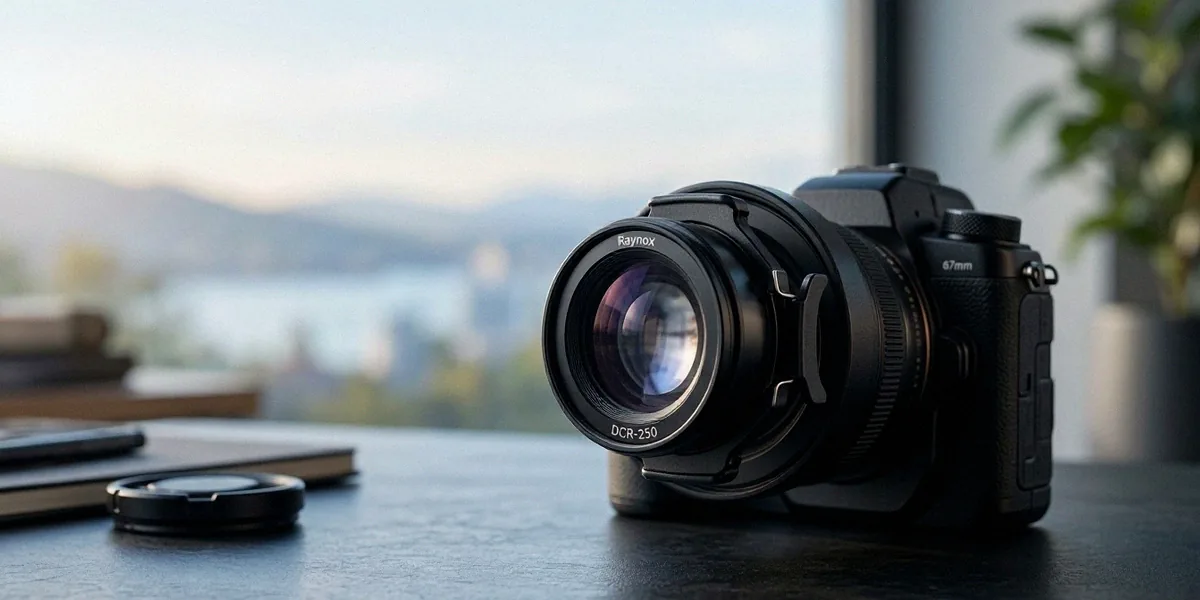
Clip-On Conversion Lenses Like the Raynox DCR-250 Explained
You’ve just nailed a hoverfly shot with your 100mm macro, you’re feeling pleased with yourself, and then someone on a forum posts a frame where the compound eyes fill the entire screen. The secret, more often than not, is a small box of glass that snaps onto the front of an ordinary lens. That box is the Raynox DCR-250, and at roughly the price of a decent memory card it turns a standard macro lens into something approaching a microscope. We think it deserves a permanent spot in every UK photographer’s bag, and here’s why.
What Are Clip-On Conversion Lenses?
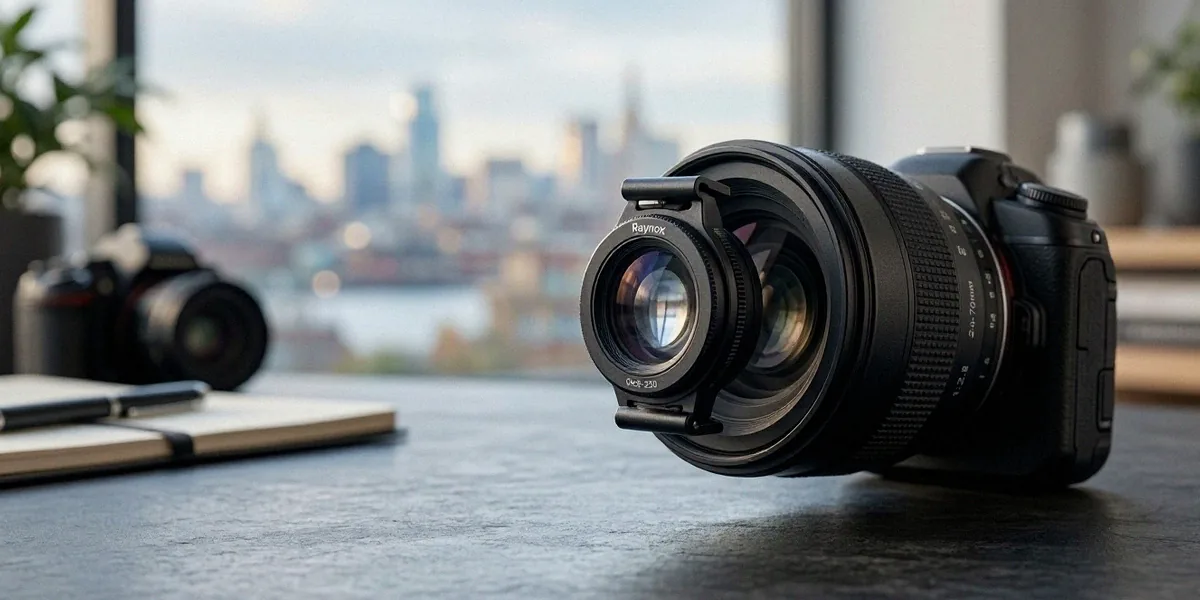
Clip-on conversion lenses are supplementary optics that attach to the front of an existing lens rather than replacing it. They don’t communicate with your camera, they have no electronics, and they don’t affect autofocus or metering directly. What they do is shorten your lens’s minimum focus distance, which increases magnification. For close-up photography, that’s the whole game.
The Raynox DCR-250 is the best-known example. It’s a small, light accessory that lives in a padded pouch and takes up less space than a spare battery. For anyone curious about macro photography without committing to a dedicated lens, it’s an inexpensive way in.
How Clip-On Lenses Work
A close-up lens is essentially a magnifying glass you screw or clip onto your front element. Its strength is measured in dioptres, and the higher the dioptre number, the shorter the resulting focal length and the greater the magnification. The physics is straightforward: adding a positive lens reduces the distance at which your main lens can focus, so the image projected onto the sensor gets bigger.
Because there are no electronics involved, image stabilisation and autofocus still function, albeit with a much narrower working range. You’ll find yourself hunting for focus far more than usual, which is why most experienced users switch to manual focus and move the camera rather than the focus ring.
Raynox DCR-250 vs Dedicated Macro Lenses
A true macro lens such as the Canon EF 100mm f/2.8L Macro IS USM is corrected for close-range work, delivers 1:1 magnification natively, and holds up well at wider apertures. The Raynox route costs a fraction of that and pushes you well beyond 1:1, often into the 2:1 to 3:1 range depending on the host lens.
The trade-offs are real. Edge sharpness drops, chromatic aberration becomes more visible, and the depth of field collapses to almost nothing. But if your goal is extreme magnification on a budget, nothing else comes close for the money.
The Raynox DCR-250 in Detail
The DCR-250 is a three-element achromatic close-up lens with an 8-diopter rating. That’s strong. For comparison, most screw-in close-up filters sold in kits are +1, +2 or +4 dioptres, and they’re usually single-element designs that soften corners badly. The Raynox’s achromatic construction is what keeps it usable at high magnification.
Key Specifications and Build Quality
- 8-diopter achromatic close-up lens with three optical elements
- Universal snap-on adapter that fits lenses with filter threads between 52mm and 67mm
- Spring-loaded mounting claws with a plastic body and metal thread on the lens barrel
- Supplied with front and rear caps plus a soft pouch
- Approximately 53mm front element diameter and around 60g in weight
Build quality is decent rather than luxurious. The snap-on adapter is the weak point — it’s plastic, and repeated mounting on a heavy lens will eventually wear the claws. Treat it gently and it’ll last years.
Compatibility with Popular UK Camera Systems
The adapter’s 52–67mm range covers most common macro primes. We’ve used it happily on the Canon EF 100mm f/2.8L Macro IS USM and the Nikon AF-S VR Micro-Nikkor 105mm f/2.8G IF-ED, both of which sit comfortably inside that window. Sony E-mount users with the 90mm f/2.8 Macro G also fit fine.
If your lens has a 72mm or 77mm filter thread, you’ll need a step-down ring. That works, but vignetting becomes a problem on wider focal lengths. Stick to short telephoto macros and you’ll be fine.
Using the Raynox DCR-250 for Macro Photography
Attaching the lens is the easy part. Getting sharp, well-lit images out of it takes practice, and the learning curve is steeper than most reviews admit.
Focusing and Depth of Field Challenges
At these magnifications, autofocus is largely useless. The depth of field is razor-thin even at apertures like f/11, often measuring less than a millimetre. The practical technique is to set focus roughly, then rock the whole camera forwards and backwards until the subject snaps into focus.
A focusing rail helps enormously for studio work. In the field, a steady hand and good breathing technique do the job. Live view magnification is your friend here — zoom in to 10x and fine-tune from there.
Lighting and Support for Close-Up Work
The working distance with the DCR-250 is short, often just a few centimetres from the front element. That means your lens casts a shadow over the subject and blocks most natural light. UK macro photographers often pair the Raynox DCR-250 with a Godox MF12 twin flash, which mounts on the lens filter thread and puts light exactly where you need it.
Diffusion matters more than power. A small softbox or a homemade diffuser over each flash head transforms harsh specular highlights into soft, usable light. For support, a tripod with a geared head is ideal indoors, while outdoors a monopod or bean bag often works better than fighting with three legs in wet grass.
Focus Stacking with the Raynox DCR-250
Focus stacking is often necessary with the Raynox DCR-250 due to its razor-thin depth of field, even at apertures like f/11. You shoot a sequence of frames, each focused on a slightly different plane, then merge them in software such as Helicon Focus or Zerene Stacker.
In the field, this means either a focusing rail or a very steady hand and a cooperative subject. Early morning is best — insects are cold, sluggish, and far less likely to move between frames. Bracket generously; ten to thirty frames is normal for a single stacked image.
Alternatives to the Raynox DCR-250
The DCR-250 isn’t the only option, and depending on your subject matter, another model might suit you better.
Other Raynox Models: DCR-150 and MSN-202
The Raynox DCR-150 is a 4.8-diopter version of the same design. It offers less magnification but a longer working distance and a slightly more forgiving depth of field. If you shoot skittish subjects or want an easier learning curve, it’s the better starting point.
The Raynox MSN-202 is the extreme option at 25 dioptres. Magnification is extraordinary, but the working distance drops to a few millimetres and lighting becomes genuinely difficult. It’s a specialist tool for studio work on dead specimens or very patient subjects.
Budget Alternatives and Their Trade-Offs
Vivitar and Polaroid both sell screw-in close-up filter sets for under £20. They’re single-element designs, which means soft corners, visible colour fringing, and a general lack of sharpness at wider apertures. For casual experimentation they’re acceptable; for anything you’d want to print, they’re not.
Extension tubes are another route. They preserve optical quality because there’s no extra glass, but they cost you light and don’t stack as conveniently with a lens you already own. If you already have a decent macro lens and want more magnification without optical compromise, tubes are worth considering.
Where to Buy and UK Pricing
Availability in the UK is good. The DCR-250 is a popular item and most serious photographic retailers keep it in stock.
Recommended UK Retailers
- Wex Photo Video — reliable stock, fast delivery, good returns policy
- Park Cameras — competitive pricing and knowledgeable staff
- Amazon UK — convenient but watch for marketplace sellers shipping grey imports
- London Camera Exchange — useful for in-person inspection at some branches
Buying from a UK retailer means you get UK consumer protection and no customs surprises. Importing directly from Japan or the US can save a few pounds, but you’ll pay VAT and handling fees on arrival, which usually wipes out the saving.
What to Expect to Pay
Popular UK retailers like Wex Photo Video and Park Cameras stock the Raynox DCR-250, typically priced between £60 and £80. Prices fluctuate with exchange rates because Raynox is a Japanese brand, so it’s worth checking a couple of retailers before buying. Second-hand examples appear regularly on forums and marketplaces for £40–£55.
Our Verdict: Is the Raynox DCR-250 Worth It?
For UK macro photographers working on a budget, the DCR-250 is one of the best-value accessories you can buy. It delivers genuine extreme magnification from a lens you already own, it fits in a coat pocket, and it costs less than a single tank of fuel.
The compromises are real: softer edges, more chromatic aberration, a fiddly plastic adapter, and a depth of field so thin that focus stacking becomes mandatory rather than optional. If you’re selling prints or shooting commercially, a dedicated macro lens plus extension tubes will always win on optical quality.
But as a gateway into macro photography — or as a cheap way to push an existing macro lens beyond 1:1 — nothing else offers this much magnification for the money.
In short, the Raynox DCR-250 is an excellent entry point into macro photography for UK enthusiasts, but dedicated lenses still win for critical work.
FAQ
Will the Raynox DCR-250 autofocus on my Canon or Nikon macro lens?
Yes, autofocus still works because the DCR-250 has no electronic connection to the camera. In practice, though, the depth of field is so thin that most users switch to manual focus and move the camera instead. Autofocus hunts constantly at these magnifications.
Does the Raynox DCR-250 fit a 77mm filter thread?
Not directly. The supplied snap-on adapter covers filter threads between 52mm and 67mm. For a 77mm lens you’ll need a step-down ring, which works but can introduce vignetting. Short telephoto macro lenses in the 52–67mm range are the sweet spot.
Do I really need focus stacking with the Raynox DCR-250?
For most subjects, yes. Even at f/11 the depth of field can be under a millimetre, so a single frame rarely captures a whole insect in focus. Stacking ten to thirty frames in Helicon Focus or Zerene Stacker is standard practice.
Is the Raynox DCR-250 better than extension tubes?
They solve the same problem differently. Extension tubes add no glass, so they preserve optical quality, but they cost you light and are bulkier to swap in the field. The DCR-250 is faster to attach and gives stronger magnification on most lenses. Many photographers own both.
Where can I buy the Raynox DCR-250 in the UK?
Wex Photo Video and Park Cameras both stock it, typically priced between £60 and £80. Amazon UK also carries it, though you should check the seller is a UK-based authorised dealer to avoid grey imports and customs charges.




Post Comment